Sarcoidosis and Long-Term Inflammation: Effects on the Heart
Sarcoidosis is a chronic systemic inflammatory disease. Although the lungs and lymph nodes are most often affected, persistent inflammation may also involve the nervous system, joints, skin and heart.
The cause is unknown, and the affected organs develop what the source describes as non-histolytic, epithelioid granulomas. The musculoskeletal system can also be involved. Of particular clinical and prognostic importance is long-standing, low-grade inflammatory activation that is not always clearly visible on radiological or serological findings, but may contribute substantially to functional damage, especially in nerve structures and muscle–tendon junctions.
Dino-Josip Ključarić presents a scientific analysis of the links between peripheral inflammatory processes, including small fiber neuropathy (SFN), polyneuropathies, synovitis, tendinitis, tenosynovitis, polyarthralgia and skin lesions, and their potential effects on cardiovascular function.
Inflammatory mediators such as TNF-alpha, IL-2 and IL-6 can affect blood vessels, microcirculation and autonomic regulation of the heart. Small fiber neuropathy and autonomic dysfunction may contribute to tachycardia, changes in heart-rate variability, orthostatic hypotension and chest discomfort.
Chronic immune activation and systemic inflammation
Activation of CD4+ T lymphocytes, macrophages and dendritic cells underlies granuloma formation and increased secretion of proinflammatory cytokines. Besides TNF-α, IL-2 and IL-6, these include interferon gamma (IFN-γ) and monocyte chemoattractant protein-1 (MCP-1). Chronic excess of these cytokines results in systemic immune dysregulation and endothelial-cell activation, affecting vascular tone, microcirculation and the homeostatic mechanisms of cardiac rhythm.
Long-lasting peripheral inflammation without exacerbations is often underestimated in clinical practice, although it contributes significantly to systemic stress. Increased IL-6 and TNF-α production is reported to correlate with endothelial dysfunction, altered expression of angiotensin II receptors and fibrotic changes in the heart’s microvascular structures.
Small fiber neuropathy and autonomic regulation of the heart
SFN affects small C and Aδ nerve fibers. Although primarily sensory, it also involves fibers regulating the sympathetic and parasympathetic nervous systems in many cases. The author describes sinus tachycardia and occasional pseudo-anginal symptoms arising from dysfunction of autonomic feedback loops between the heart, blood vessels and central autonomic nuclei rather than coronary disease.
Inflammation and cytokine stimulation can further worsen chronic autonomic dysregulation in SFN, potentially producing persistent sympathetic dominance. This burdens the myocardium, increases oxidative stress and contributes to changes in heart rate at rest and during exertion.
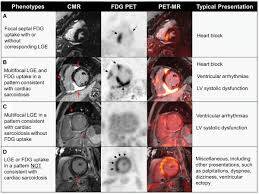
Polyneuropathy, joint and tendon inflammation and skin disease can reduce physical activity and increase systemic stress. These indirect effects may add to cardiovascular risk, while direct cardiac sarcoidosis can cause conduction block, ventricular arrhythmias, heart failure and sudden cardiac death.
Polyneuropathies and neuromuscular stress
People with sarcoidosis often develop more extensive polyneuropathies affecting both sensory and motor fibers, compromising functional reserve and causing muscular deconditioning. Reduced aerobic capacity, increased peripheral resistance and hypertensive responses place an additional burden on the heart. Damage to reflex circuits between the muscles and heart may also alter cardiac rhythm regulation.
Polyarthralgia, synovitis, tendinitis and tenosynovitis
These joint and tendon manifestations range from pain in several joints without swelling (polyarthralgia), through thickening and inflammation of the joint lining (synovitis), to inflammation of tendons and their sheaths (tendinitis and tenosynovitis). Pain, stiffness, reduced mobility and functional limitations produce a systemic inflammatory response over time.
The author describes these manifestations as raising systemic concentrations of IL-6, TNF-α and C-reactive protein (CRP), describing this as a known cardiovascular risk factor, including for cardiac fibrosis, arrhythmias and endothelial dysfunction. The cumulative effects of localized inflammation may destabilize haemodynamic and neurohumoral balance over time.
Skin changes as an indicator of systemic activity
Skin manifestations such as lupus pernio, erythematous nodules and granulomatous infiltrates often correlate with high systemic disease activity. The source describes them as clinically less dangerous than lung or heart changes, while remaining a source of chronic cytokine stimulation. Activation of Langerhans cells and local macrophages may provide a continuing source of proinflammatory mediators that impair vascular reactivity and increase systemic vascular resistance.
Direct and indirect cardiac manifestations
Direct cardiac sarcoidosis involves granulomatous infiltration of the myocardium, including atrioventricular (AV) conduction block among its possible consequences. Even without direct infiltration, long-term systemic inflammation may promote fibrosis, microvascular ischaemia and electrical instability. Indirect pathways include SFN-related autonomic dysfunction, systemic hypoxia, increased sympathetic tone and an imbalance between oxidants and antioxidants.
People with long-standing systemic inflammation, palpitations, unexplained fatigue, dizziness or symptoms of heart failure may benefit from proactive cardiac assessment. ECG, echocardiography, cardiac MRI, PET and laboratory tests are selected according to the clinical situation.
Conclusion of the source discussion
Systemic inflammation should be considered beyond the individual affected organ, as a process that can influence multiple regulatory mechanisms, including heart function. Nerve disease, joint and tendon inflammation and skin manifestations actively contribute to a cytokine environment that disrupts vascular and cardiac homeostasis. The author advocates proactive cardiac follow-up for all people with systemic, long-standing inflammation in sarcoidosis, particularly those with autonomic dysfunction, fatigue, palpitations or nonspecific symptoms of cardiac weakness. The multidisciplinary approach is key to early detection and modification of cardiovascular-complication risk.
A multidisciplinary team involving cardiology, pulmonology, neurology, rheumatology and immunology can help identify complications early and guide treatment. This information does not replace an individual medical examination.
Dino-Josip Ključarić
References:
Birnie DH, Nery PB, Ha AC, Beanlands RS.
Cardiac sarcoidosis.
J Am Coll Cardiol. 2016;68(4):411–421.
doi:10.1016/j.jacc.2016.03.605
Kandolin R, Lehtonen J, Airaksinen J, et al.
Cardiac sarcoidosis: epidemiology, characteristics, and outcome over 25 years in Finland.
Circulation. 2015;131(7):624–632.
doi:10.1161/CIRCULATIONAHA.114.011522
HRS Expert Consensus Statement on the Diagnosis and Management of Arrhythmias Associated With Cardiac Sarcoidosis.
Heart Rhythm. 2014;11(7):1305–1323.
doi:10.1016/j.hrthm.2014.03.043
Ridker PM, Rifai N, Stampfer MJ, Hennekens CH.
Plasma concentration of interleukin-6 and the risk of future myocardial infarction among apparently healthy men.
Circulation. 2000;101(15):1767–1772.
doi:10.1161/01.CIR.101.15.1767
Hansson GK.
Inflammation, atherosclerosis, and coronary artery disease.
N Engl J Med. 2005;352(16):1685–1695.
doi:10.1056/NEJMra043430
Libby P.
The changing landscape of atherosclerosis.
Nature. 2021;592(7855):524–533.
doi:10.1038/s41586-021-03392-8
Oaklander AL, Nolano M.
Scientific advances in and clinical approaches to small-fiber polyneuropathy.
JAMA Neurol. 2019;76(11):1240–1251.
doi:10.1001/jamaneurol.2019.2911
Hoitsma E, Drent M, Verstraete E, et al.
Abnormal warm and cold sensation thresholds suggestive of small-fiber neuropathy in sarcoidosis.
Clin Neurophysiol. 2004;115(5):1124–1130.
doi:10.1016/j.clinph.2003.12.012
Raj SR.
The Postural Tachycardia Syndrome (POTS): Pathophysiology, Diagnosis & Management.
Indian Pacing Electrophysiol J. 2006;6(2):84–99.
PMID: 16943959
Lower EE, Broderick JP, Brott TG, Baughman RP.
Diagnosis and management of neurological sarcoidosis.
Arch Intern Med. 1997;157(16):1864–1868.
doi:10.1001/archinte.1997.00440370064009
Gerfaud-Valentin M, Jamilloux Y, Valeyre D, Varron L, Cottin V, Iwaz J, Sève P.
Clinical presentation of sarcoidosis in a large white cohort: influence of gender, age, and cutaneous involvement.
PLoS One. 2019;14(8):e0221046.
doi:10.1371/journal.pone.0221046
Fayad F, Lioté F, Berenbaum F, Orcel P, Kahan A.
Musculoskeletal manifestations of sarcoidosis.
Ann Rheum Dis. 2000;59(10):719–724
doi:10.1136/ard.59.10.719
Mana J, Marcoval J.
Skin manifestations of sarcoidosis.
Presse Med. 2012;