

Atypical Sarcoidosis
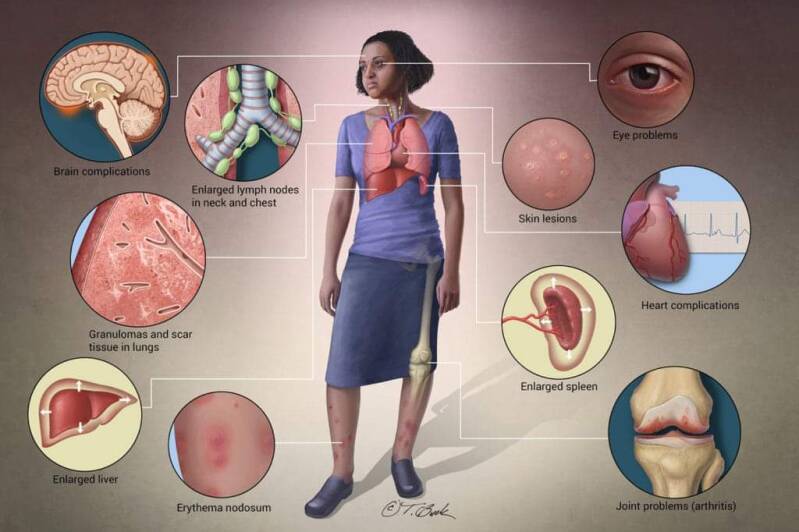
Sarcoidosis does not always follow the usual pattern of lung and lymph-node involvement. Atypical disease may affect the heart, nervous system, eyes, liver, spleen, bones, skin or other organs, sometimes with non-specific symptoms.
A careful history, examination, targeted imaging and laboratory tests are needed. The treatment plan depends on the organs involved and the activity and severity of disease.
The source describes “atypical or unspecified sarcoidosis” under code D86.9.
I will briefly introduce my type of sarcoidosis.
An idiopathic inflammatory disorder characterised by the formation of non-necrotising (non-caseating) epithelioid granulomas containing giant cells. It usually affects the lungs, lymph nodes, liver and skin. Heart involvement is also possible.
An idiopathic systemic inflammatory granulomatous disorder consisting of epithelioid and multinucleated giant cells with little necrosis. It usually affects the lungs with fibrosis and may also affect the lymph nodes, skin, liver, spleen, eyes, phalangeal bones and parotid glands.
An inflammatory disease characterised by granulomas (small nodules of immune cells) in the lungs, lymph nodes and other organs. Sarcoidosis can be acute and resolve on its own, or chronic and progressive.
Its cause is uncertain. It affects men and women of all ages and ethnic backgrounds, occurring mainly in people aged 20–50, African Americans, particularly women, and people of northern European ancestry. Many people have no symptoms. When present, symptoms may include:
- Cough
- Shortness of breath
- Weight loss
- Night sweats
- Fatigue
Tests used to diagnose sarcoidosis include chest X-rays, lung function tests and biopsy.
Not everyone with this disease needs treatment.
When treatment is needed, prednisone, a type of steroid, is the main treatment described here.
The source describes a group of 5% of patients who do not respond to steroids and are treated with a cytostatic drug.
This form of sarcoidosis may cause acute arthritis, usually affecting the ankles and knees and, less often, the proximal interphalangeal joints, wrists and elbows.
Acute arthritis is symmetrical and lasts several weeks. Less common chronic arthritis is destructive and may involve dactylitis and telescoping fingers.
Diagnosis is made by excluding alternative diagnoses, based on the clinical picture and histology of biopsy tissue.
CLINICAL PICTURE
My clinical picture is marked by bilateral lymphadenopathy with granulomas spreading despite steroids, liver involvement, kidney lesions, bladder calcification and damage to the spleen, involvement of the phalangeal bones, and skin changes with swelling on the lower legs (erythema nodosum).
During the acute phase, my fatigue progressed to chronic fatigue. I was unable to walk because of painful erythema nodosum and experienced breathlessness, exhaustion, weight loss (20 kg in two weeks), pressure or severe sharp chest pain, and a feeling of suffocation.
Side effects reported in my account 90 days after reducing corticosteroid treatment:
- Light-headedness, dizziness and fatigue.
- Pain and burning in the tissues of the lower legs.
- Eye pain and sometimes blurred vision.
- Frequent urination.
- Chest pain, chest tightness, shortness of breath, difficulty breathing and loss of breath.
- Loss of strength during exertion and at rest.
- Weight loss.
- Exercise intolerance (collapse or weakness during exertion).
- General weakness (occasionally).
- Sleep disturbances (for about 30 days).
- Night and daytime sweating and feeling hot.
- Thinning and drying of the skin, sometimes with white patches resembling vitiligo on the forearms.
A second CT scan shows that lymph-node growth has doubled and that granulomas are spreading to the left side. Treatment with corticosteroids and the cytostatic drug MTX begins.
Additional invasive and other investigations: CT scan, UBUS, bronchoscopy, gastroscopy, colonoscopy, biopsies of erythema nodosum, and biopsies of suspicious lymph nodes.
***
One year later: loss of vision and treatment, blood-pressure disturbances and a high heart rate, and swelling of the joints in the legs.