

Adrenal glands and glucocorticosteroid therapy
The adrenal glands (Glandula adrenalis or Glandula suprarenalis),
located on top of the kidneys.
They produce hormones that are essential for the body to function.
The outer layer (cortex glanulae suprarenalis) of the adrenal glands produces three types of steroid hormones.
The glands regulate the stress response through the synthesis of catecholamines and corticosteroids, including cortisol and adrenaline, out of a total of around thirty hormones. In this way, they regulate electrolytes in the body's extracellular fluid.
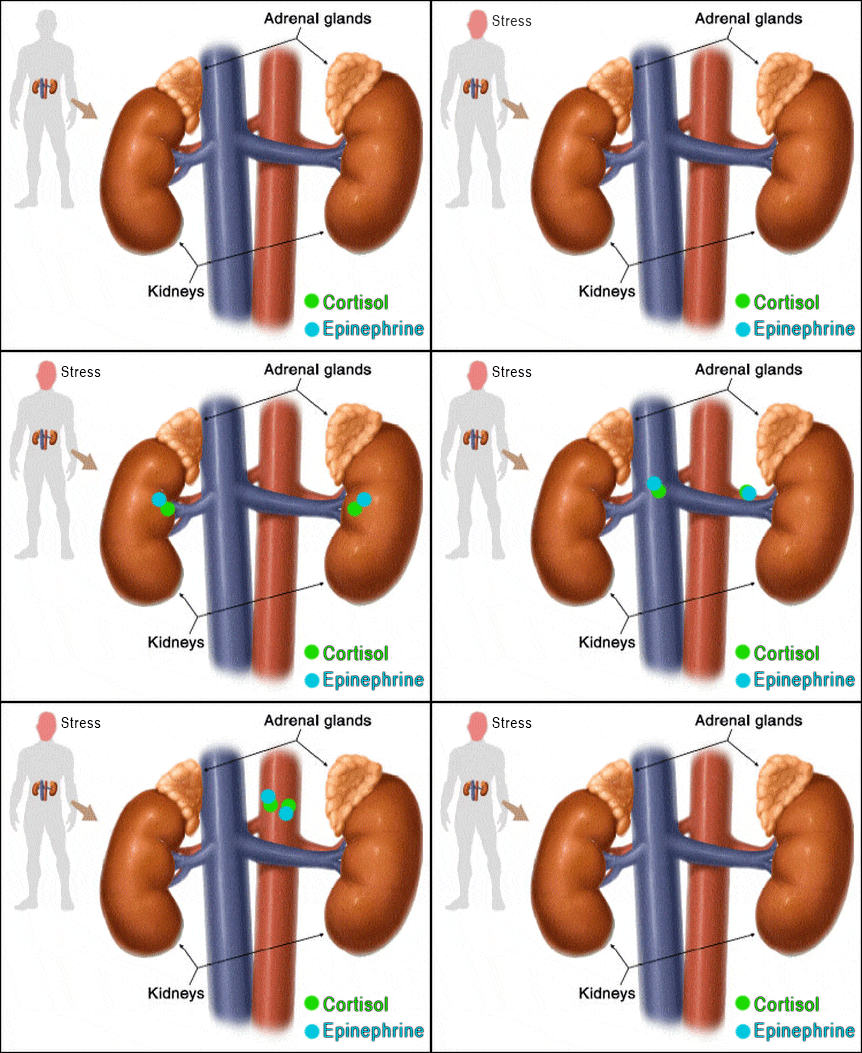
Adrenal gland hormones
The hormones of the adrenal cortex are collectively called corticosteroids, which are divided into three groups according to their biological characteristics (glucocorticoids, mineralocorticoids and sex steroids).
GLUCOCORTICOIDS - the most important and most abundant is cortisol (hydrocortisone), which acts on the metabolism of carbohydrates (glucose), proteins and fats. Its secretion increases in stressful situations.
MINERALOCORTICOIDS - aldosterone, which controls water and salt metabolism.
SEX STEROIDS - androgens, oestrogens and progesterone, which are secreted in small amounts and are produced mainly in the sex glands.
An elevated cortisol level over a prolonged period exhausts the adrenal glands. Because they can no longer produce as many hormones as the stress we subject them to every day demands, disturbances occur in the metabolism of carbohydrates, fats, proteins and electrolytes, as well as changes in the tissue of the gland itself or its enlargement (hyperplasia).
The most common effects of cortisol on metabolism:
- unlike insulin, it prevents glucose utilisation in cells, leading to an increased concentration of glucose in the blood (hyperglycaemia)
- the formation of glucose from amino acids in the liver increases (gluconeogenesis)
- the production (biosynthesis) of proteins in cells decreases, particularly in muscles, bones and lymphatic organs
- the breakdown of proteins in muscles and bones is stimulated, leading to loss of muscle mass and accelerating osteoporosis; protein levels decrease in tissues and increase in the blood and liver.
Because proteins are made up of amino acids, the liver uses their increased influx to produce glucose. Increased protein loss leads to reduced muscle strength and muscle weakness.
Osteoporosis results from increased bone resorption, reduced activity of bone-building cells (osteoblasts) and reduced calcium reserves. Calcium excretion in the urine increases, which may also lead to kidney stones.
- the mobilisation of fatty acids from subcutaneous fat tissue accelerates, leading to an increased concentration of free fatty acids in the blood and the accumulation of fat on the trunk and neck and around the peritoneum and internal organs (central or abdominal obesity).
Cortisol (hydrocortisone)
- is a steroid hormone,
- affects protein metabolism by breaking down proteins in muscles and other tissues. This produces amino acids from which the liver makes other proteins needed by the body.
- it is an anti-inflammatory hormone (glucocorticoid) with a significant effect on the formation of glucose in the blood,
- it is secreted in response to the secretion of adrenocorticotropic hormone (ACTH)
- it is called the stress hormone because its secretion depends on the level of psychological or physical stress as a consequence of the secretion of adrenocorticotropic hormone (ACTH),
- cortisol increases gluconeogenesis in the liver (the formation of glucose from amino acids and other compounds)
- it exists in synthetic compounds (medicines such as Medrol)
Problems with adrenal gland function
(Adrenal insufficiency)
1. Primary adrenal insufficiency (AI) or Addison's disease
This is a rare condition in which the adrenal glands do not function properly and cannot produce enough cortisol. Production of aldosterone and androgens (the other two types of steroid hormones produced by the adrenal glands) is usually low.
The cause is most often an autoimmune disease.
2. Secondary adrenal insufficiency
This occurs when the pituitary gland does not signal the adrenal glands to produce cortisol. Aldosterone production is normal in secondary adrenal insufficiency. The cause is that the pituitary gland does not send enough ACTH to the adrenal glands, so not enough cortisol is produced.
Some causes may be temporary. For example, the cause may be taking certain medicines such as prednisone, hydrocortisone or dexamethasone.
Adrenal gland problems caused by medicines
Synthetic glucocorticoids (e.g. Medrol) are used for their anti-inflammatory and immunosuppressive effects. A possible adverse effect of treatment with glucocorticoids is suppression of the hypothalamic-pituitary-adrenal axis, which can lead to adrenal insufficiency.
Causes of insufficiency:
- long-term glucocorticoid therapy,
- route of administration,
- glucocorticoid dosage (strength),
- medicines taken at the same time that interfere with glucocorticoid metabolism
Patients receiving glucocorticoid therapy may develop features of Cushing's syndrome, followed by glucocorticoid withdrawal syndrome when treatment is reduced.
Treatment
A careful approach to reducing the glucocorticoid dose and appropriate patient counselling are necessary to ensure successful dose reduction. Glucocorticoid therapy should not be stopped completely until adrenal function has recovered.
Negative changes in the body (side effects of corticosteroids)
Cortisol is an immune regulator that helps people overcome physical or psychological stress by giving the body additional strength through “feeding” it glucose.
Disturbances resulting from taking these medicines include:
- increased blood glucose,
- high blood pressure,
- disturbed thyroid function,
- palpitations,
- menstrual disturbance,
- obesity,
- reduced testosterone levels,
- reduced muscle tissue,
- mood disturbance,
- depression
- thinning of the skin
- internal bleeding